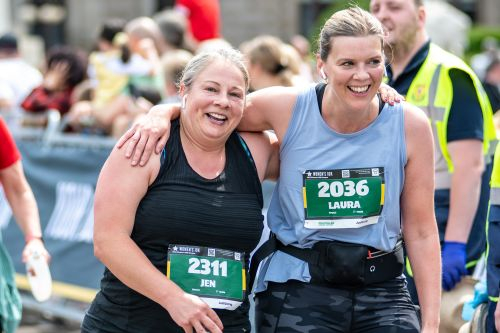
The Women’s 10K Glasgow begins beside the Riverside Museum and follows the River Clyde into the heart of the city before finishing in Glasgow Green. For participants, the route offers a memorable journey past the Glasgow Science Centre, SEC Armadillo, SEC Centre and OVO Hydro. It then crosses the Clyde, continues through Buchanan Street and passes George Square before entering the final section in Glasgow Green. The event’s supportive atmosphere may feel spontaneous, but it is built on months of preparation. Behind the runners are course planners, traffic managers, volunteers, medical professionals, baggage teams, timing technicians and race-control staff working as one connected operation. The Women’s 10K also follows the Men’s 10K Glasgow on the same event day. That creates an additional challenge: resetting the entire operation for another field while parts of the first race are still being cleared.
Planning a Point-to-Point 10K
A point-to-point race creates immediate logistical questions. How will runners reach the start? How will their baggage reach the finish? How will spectators travel between the two locations? The operations team builds the answers into the event plan. Official transport, railway access, designated drop-off points and pedestrian routes all need to connect with the start timetable. Baggage vehicles require routes that avoid road closures and the runners. The course itself passes through several different environments. Riverside roads, bridge approaches, pedestrianised shopping streets and parkland each need separate safety assessments. Planners consider where the field will remain tightly packed, where runners are likely to spread out and where large spectator crowds may gather. They also identify emergency-access routes and positions for medical teams. A route may look straightforward on a map but become much more complicated when thousands of runners, spectators and members of the public are added. Every turn, crossing, barrier and sign is recorded in a detailed course plan.
Preparing for Two Races on One Day
The Women’s 10K uses much of the same course and infrastructure as the earlier Men’s 10K, but each event must remain operationally separate. Timing systems need to be reset for a different participant database. Baggage vehicles must be prepared for another set of runners, and start pens need to be checked before the Women’s field arrives. Medical teams review any incidents from the first race and confirm which resources remain available. Finish supplies such as medals, water and refreshments are counted and replenished. Volunteers may require breaks or position changes. Those movements must be coordinated so critical junctions and course sections are never left unprotected. Any displaced sign or barrier must be corrected. Waste from the earlier event needs to be cleared before another field reaches the course. If the Men’s race is delayed, the effect can travel through the entire schedule. Race control may need to adjust volunteer instructions, road-reopening plans and start preparations. This turnaround period is one of the busiest parts of the day, even though it may appear quiet to spectators.
Transforming Riverside Museum Into a Start Venue
Before runners arrive, the Riverside Museum area must be converted into a functioning race start. Contractors and event staff install barriers, start pens, toilets, baggage facilities, information points and timing mats. Every item has an assigned position. Vehicle access becomes restricted as road closures begin, so deliveries must arrive according to schedule. Equipment that reaches the site late may be unable to get through. Timing technicians test the start mats and their communication links. Course managers confirm that every sector ahead is ready. Volunteers receive briefings explaining where to direct participants, how the starting pens will work and what to do when someone needs a replacement race number or additional support. Normal parking and drop-off facilities at the museum may be unavailable. Staff therefore manage people arriving from Partick station, event buses and designated drop-off points. As the start approaches, participants move into pens based on predicted finishing times. The field is then released in a controlled sequence, reducing congestion in the opening kilometres. Once the last participant departs, the start team begins dismantling equipment and restoring the site.
Moving Baggage Across Glasgow
Because the race finishes at Glasgow Green, every bag left at Riverside Museum must be transported across the city. Participants attach identifying tags before handing their bags to volunteers. The bags are organised into number ranges and loaded into assigned vehicles. Loading order matters. A carefully packed vehicle can be unloaded efficiently, while an unplanned sequence could delay the entire collection process. Baggage vehicles need to leave on time and follow routes that remain available during the closures. Drivers receive specific event instructions rather than relying only on ordinary navigation. At Glasgow Green, volunteers unload the bags into clearly marked collection areas. The layout must allow runners to retrieve their belongings without blocking the finish exit or medical access. A runner who has finished in cold or wet weather may urgently need a warm layer. That makes accurate baggage handling more than a convenience. Teams also need a process for missing labels, damaged bags and items placed in the wrong collection zone.
The Course Team Along the Clyde
Course crews install the physical infrastructure that turns city streets into a race route. They position cones, directional arrows, barriers, kilometre signs and safety notices. Every turn is checked before the start. Surface inspections identify hazards such as broken glass, standing water, loose street furniture or unexpected roadworks. Problems are cleaned, marked or escalated. The early riverside section passes major visitor and entertainment venues. The team must maintain safe runner flow while managing members of the public who may not know that a race is taking place. Bridge approaches receive particular attention. Space can narrow, and pedestrian movement may conflict with the course. Sector managers confirm that their sections are ready before race control authorises the start. During the event, they respond to reports and deploy additional staff or equipment where required. After the final runner and sweep operation pass, the course team reverses the process, removing infrastructure and checking that the streets are safe to reopen.
Volunteers: The Human Face of the Event
For many runners, volunteers are the only representatives of the organiser they speak to directly. At Riverside Museum, volunteers answer questions, provide directions and reassure nervous participants. Along the route, marshals point runners in the right direction and keep crossings controlled. In busy city-centre areas, they also communicate with shoppers, residents, taxi drivers and visitors affected by temporary restrictions. A calm explanation can prevent frustration from becoming confrontation. Volunteers need to be friendly while remaining firm about safety. They also form an observation network across the course. A marshal may be the first person to notice a damaged barrier, confused runner or medical problem. Briefings explain how to report incidents accurately. Volunteers use specific location references and describe what they can see rather than attempting to diagnose a condition. At Glasgow Green, finish volunteers distribute medals and refreshments while keeping participants moving through the recovery area. Volunteer welfare is an operational responsibility too. People may remain outside for several hours, so they require suitable clothing guidance, refreshments and clear release instructions.
Medical Operations From Start to Finish
The Women’s 10K attracts participants with a wide range of abilities and experience. Competitive runners may be operating close to their physical limit, while first-time entrants may be less familiar with pacing, hydration and recovery. Medical teams prepare for common problems such as trips, muscle injuries, dehydration and dizziness. They are also ready for rare but serious emergencies. Resources are positioned according to runner density, course geography and access. Fixed treatment points are supported by mobile responders. The bridges and riverside sections require specific access planning. An emergency vehicle cannot simply enter any part of a closed course without coordination. Marshals reporting an incident provide the precise location and visible symptoms. Race control then assigns the nearest appropriate medical resource. At Glasgow Green, clinicians monitor runners after they stop. Someone may cross the line unaided but become unwell several minutes later. The aim is to identify developing problems early while maintaining the ability to respond rapidly to a serious incident.
Race Control: Connecting Every Team
Race control is the event’s operational nerve centre. It receives reports from course managers, traffic teams, medical staff, transport coordinators, timing technicians and the finish venue. The team tracks the leading runner, main field and final participants. Those positions determine when finish teams should prepare and when roads may begin reopening. If a member of the public enters the course, a vehicle reaches a barrier or a medical incident affects runner flow, race control coordinates the response. Radio messages need to be short and specific. Agreed call signs and location references allow teams to understand problems without lengthy explanations. Race control also monitors the schedule. Any delay can affect road closures, volunteer hours, bus operations and the time required to clear the city. Important actions and decisions are logged so they can be reviewed later.
Managing Glasgow’s Bridges and City Centre
The course crosses the Clyde using the Clyde Arc and George V Bridge before entering the city centre. Bridge closures and approaches need strong barriers and trained staff. A vehicle or pedestrian entering at the wrong time could create a serious hazard. Buchanan Street and George Square present different challenges. These are busy public spaces with shops, businesses and high pedestrian numbers. Managed crossing points may operate when safe gaps appear, but members of the public cannot decide independently when to cross. Road closures also affect buses and taxis. Transport operators receive advance information so drivers can follow planned diversions. Glasgow’s Low Emission Zone adds another factor. Temporary event arrangements must be communicated precisely and cannot be interpreted as a general exemption for non-compliant vehicles. Roads reopen in stages only after the final participant, sweep team and clearance crews have passed.
Timing Every Participant
Every runner wears a timing device linked to her event number. Mats at the start and finish record each participant, while intermediate equipment may help the operations team track the field. The timing system is tested before the race and supported by backups. Cables and equipment must be protected from weather, vehicles and pedestrians. Because the Men’s race takes place earlier, technicians ensure the Women’s 10K is configured as a separate event. A mistake at this stage could affect thousands of results. Finish cameras provide an additional record when several runners cross together. After the event, unusual or missing results are investigated using information from multiple systems.
Delivering the Finish in Glasgow Green
Glasgow Green provides space for a major finish operation, but it still requires careful design. The finish line includes timing mats, cameras, barriers, signage and a public-address system. Every component is tested before the first runner arrives. Participants need room to slow down safely. Volunteers encourage them to continue moving rather than stopping immediately to wait for friends or check their watches. Medals, hydration and refreshments are distributed in sequence. Each area needs enough capacity to prevent queues building backwards towards the line. Baggage collection is positioned beyond the finish flow. Spectators wait in designated reunion areas rather than entering the controlled funnel. Medical routes must remain clear, even at the busiest time. Clinicians need immediate access if a runner collapses. Waste teams work throughout the event, removing bottles and packaging before they create a hazard.
Transporting and Dispersing the Crowd
Official buses may connect the city centre, Riverside Museum and Glasgow Green. Transport coordinators manage ticket checks, departure queues and passenger numbers. They report delays to race control and information teams. Rail services through Partick, Queen Street and Glasgow Central help distribute demand. Sunday Subway operating times may make the system unsuitable for some pre-race journeys but useful afterwards. At the finish, thousands of people may leave Glasgow Green within a relatively short period. Clear walking routes and transport guidance help prevent crowding. The operations team also considers spectators who need to return to a vehicle near the start. Return services must continue after the race without blocking local roads.
Working With Glasgow’s Communities
The event depends on cooperation from Glasgow City Council, emergency services, transport operators, businesses and residents. Residents near the course need advance information about parking suspensions and access. Businesses may require revised delivery arrangements. On event day, marshals protect the route while responding respectfully to people affected by closures. Cleaning crews follow the event, collecting waste and temporary materials. Roads cannot reopen until they are safe for ordinary traffic. The organiser’s responsibility extends beyond the runner. The event must leave the city in good condition and maintain the trust required to return in future years.
The Work Continues After the Finish
The final runner does not mark the end of the operation. Timing data is checked, medical incidents documented and lost property recorded. Radios, volunteer equipment and unused supplies are returned. Contractors remove barriers, toilets, signs and technical infrastructure. Course managers inspect each sector. A post-event review examines transport performance, bridge operations, volunteer deployment, medical activity and finish congestion. Feedback from runners is considered alongside reports from residents, businesses and city partners. Volunteer observations are particularly valuable because they reveal repeated problems at specific locations. The Women’s 10K Glasgow succeeds when participants remember the Clyde, the encouragement through the city and the celebration in Glasgow Green. Behind that apparently seamless experience are the people who arrived before the runners, stood at crossings, moved baggage, treated injuries and remained until the city was clear. Their collective work creates the conditions in which thousands of individual achievements can take place.